







I’ll never forget the first time I heard about forex trading. I was at a coffee shop in 2014, eavesdropping (okay, maybe intentionally listening) on two guys talking about making $3,000 in a single day “just trading currencies.”
My first thought? “That sounds like a scam.”
My second thought? “But what if it’s not?”
Ten years later, after countless trades, some spectacular wins, some painful losses, and a whole lot of learning, I’m here to walk you through exactly what forex trading is—stripped of the hype, the get-rich-quick promises, and the confusing jargon that keeps most people from ever understanding it.
Grab your coffee. Let’s dive into the world’s largest financial market.
What Exactly Is Forex Trading? (The Simple Answer)
Forex—short for “foreign exchange“—is simply the act of converting one currency into another.
That’s it. That’s the core concept.
When you travel to Europe and exchange your dollars for euros at the airport, you’re participating in the forex market. When Apple needs to pay suppliers in China and converts USD to Chinese yuan, that’s forex too.
But here’s where it gets interesting: most forex trading isn’t done for practical purposes like travel or business. It’s done by traders like me trying to profit from the constant fluctuations in currency values.
The Numbers That Still Blow My Mind
As of November 2025, the global forex market processes about $9.6 trillion in trades every single day. Let me put that in perspective:
- That’s roughly $400 billion per hour.
- About $6.6 billion per minute
- More than $110 million per second
The entire U.S. stock market, on a busy day, might see $500 billion in volume. Forex does that before most Americans have finished their morning coffee.
This makes forex the largest, most liquid financial market on the planet—by an absolutely massive margin.
My First Forex Trade (And Why I Almost Quit Immediately)
Let me tell you about my baptism by fire.
It was March 2015. The Swiss National Bank had just shocked the world by removing the Swiss franc’s peg to the euro. The market went absolutely insane. I’d been paper trading (practicing with fake money) for about six months and felt pretty confident.
I opened a live account with $500. My strategy was simple: buy EUR/USD (euro vs. US dollar) when it dipped below a certain level, then sell when it bounced back.
Within three days, I’d turned my $500 into $320.
I’d lost 36% of my account because I didn’t understand one critical concept: leverage.
Let me explain what that means, because it’s both the most exciting and most dangerous aspect of forex trading.
How Forex Actually Works: The Mechanics
Currency Pairs: Always Two Currencies at Once
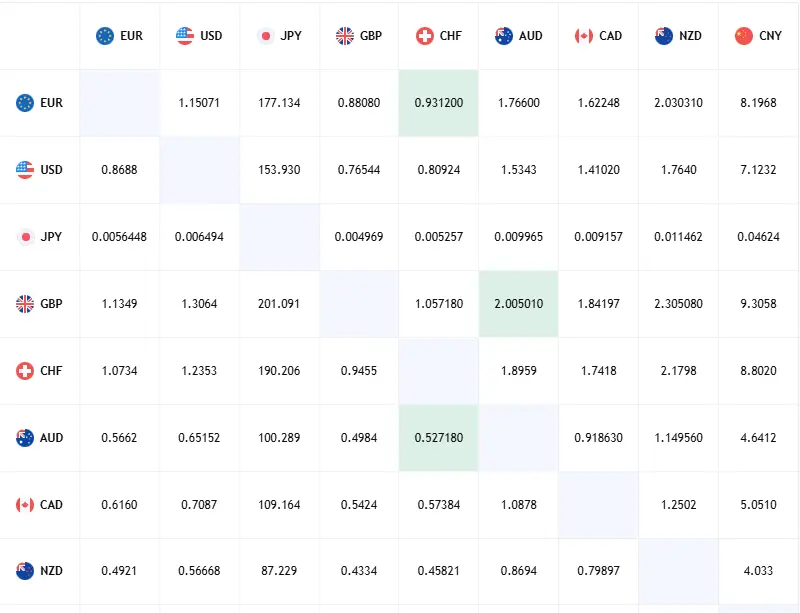
In forex, you’re never just buying or selling one currency—you’re always trading one currency against another. They come in pairs.
The most popular pairs are
EUR/USD (Euro vs. US Dollar)—This is the heavyweight champion, accounting for about 25% of all forex trading. In April 2025, it averaged over $1 trillion in daily volume.
USD/JPY (US Dollar vs. Japanese Yen)—The second most traded pair, hugely popular in Asian markets.
GBP/USD (British Pound vs. US Dollar)—Nicknamed “Cable” because the exchange rate used to be transmitted across the Atlantic via underwater cable.
USD/CHF (US Dollar vs. Swiss Franc)—The “Swissie,” considered a safe-haven currency.
Understanding the Base and Quote Currency
In any currency pair, there are two positions:
The Base Currency (on the left): Always equals 1. In EUR/USD, the EUR is the base.
The Quote Currency (on the right): Tells you how much of that currency you need to buy one unit of the base.
So if EUR/USD is trading at 1.1000, that means 1 euro costs 1.10 US dollars.
What It Means to “Buy” or “Sell” a Pair
Here’s where my brain initially exploded, so let me make this crystal clear:
Buying EUR/USD means you think the euro will strengthen against the dollar. You’re betting that the number will go UP. If EUR/USD moves from 1.1000 to 1.1100, you profit because now 1 euro is worth more dollars.
Selling EUR/USD means you think the euro will weaken against the dollar. You’re betting the number will go DOWN. If EUR/USD drops from 1.1000 to 1.0900, you profit because euros have become cheaper relative to dollars.
This confused me for MONTHS when I started. I kept thinking, “Wait, if I’m selling EUR/USD, am I selling euros or dollars?”
Answer: You’re selling the pair, which means you’re selling the base currency (EUR) and buying the quote currency (USD).
Pips: The Tiny Movements That Make or Break You
A “pip” is the smallest price movement in forex. For most pairs, it’s the fourth decimal place.
If GBP/USD moves from 1.2550 to 1.2551, that’s a 1-pip movement.
It doesn’t sound like much, right? But here’s where leverage comes in…
Leverage and Margin: Your Best Friend and Worst Enemy
This is what nearly wiped out my account on day three.
Leverage allows you to control a large position with a relatively small amount of capital. With 50:1 leverage, you can control $50,000 worth of currency with just $1,000.
Sounds amazing, right? And it can be! That 1-pip movement I mentioned? On a standard lot (100,000 units), one pip is worth about $10. With leverage, your $1,000 can control that position.
But here’s the catch: leverage amplifies both gains AND losses.
If the market moves 100 pips in your favor, you make $1,000 (doubling your account). If it moves 100 pips against you, you’ve lost your entire $1,000.
This is what happened to me. I used too much leverage on my first trade; the market moved 50 pips against me in two hours, and I’d lost 36% before I even understood what was happening.
The lesson: Leverage is a tool, not a toy. I now rarely use more than 10:1 leverage, and I sleep much better.
How I Actually Make (and Sometimes Lose) Money Trading Forex
Let me walk you through a real trade I made last month.
The Setup
Date: October 15, 2025 Pair: EUR/USD Price: 1.0850
I’d been watching the European Central Bank’s statements about interest rates. They were hinting at potential rate cuts due to slowing economic growth. Meanwhile, the U.S. Federal Reserve was maintaining a “higher for longer” stance on rates.
Higher interest rates typically strengthen a currency because they attract foreign investment seeking better returns.
My Analysis
I believed the euro would weaken against the dollar over the next few weeks. So I decided to sell EUR/USD (go “short”).
The Trade
- Entry price: 1.0850
- Position size: 10,000 units (0.1 lots)
- Stop loss: 1.0900 (50 pips above my entry, limiting my potential loss)
- Take profit target: 1.0750 (100 pips below my entry)
With my position size, each pip was worth about $1.
What Happened
Over the next week, EUR/USD dropped to 1.0780 as economic data confirmed Europe’s slowdown. I closed my position there, not quite hitting my target but satisfied with the profit.
Result: 70 pips × $1 per pip = $70 profit on a trade that required only about $100 in margin (with 10:1 leverage).
That’s a 70% return on my margin in one week.
The Trade That Went Wrong
Of course, they don’t all work out. Two weeks later, I tried a similar trade on GBP/USD. I thought the pound would weaken, but suddenly the Bank of England surprised markets with hawkish (pro-growth, anti-inflation) commentary.
GBP/USD shot up 80 pips in four hours. My stop loss got hit, and I lost $80.
That’s forex. Some trades work, some don’t. The goal is to be right more often than you’re wrong and to make more when you’re right than you lose when you’re wrong.
What Actually Moves Currency Prices? (The Factors That Matter)
After ten years, I’ve learned that currencies move based on a complex interplay of factors. Let me break down the main ones:
1. Central Bank Policy (The Big Kahuna)
Nothing—and I mean NOTHING—moves currencies like central bank announcements.
When the Federal Reserve raises interest rates, the dollar typically strengthens. When the European Central Bank cuts rates, the euro typically weakens.
Why? Higher interest rates attract international investors seeking better returns on their money. Increased demand for a currency drives up its price.
I mark every central bank meeting on my calendar. The Federal Reserve, European Central Bank, Bank of England, and Bank of Japan—these are the puppet masters pulling the strings.
2. Economic Data Releases
Every week brings a flood of economic reports: jobs numbers, inflation data, GDP growth, consumer spending, and manufacturing activity.
Strong data = stronger currency (usually). Weak data = weaker currency (usually)
But here’s the tricky part: markets trade on expectations. If everyone expects U.S. jobs growth of 200,000 and the actual number is 190,000, the dollar might weaken—even though 190,000 jobs is objectively good news.
You’re not trading the news itself; you’re trading whether the news beats, meets, or misses expectations.
3. Market Sentiment (The Wild Card)
Sometimes currencies move for no logical reason other than “that’s what everyone else is doing.”
If traders believe the dollar is headed higher, they’ll buy dollars. This increased demand pushes the price up, which attracts more buyers, creating a self-fulfilling prophecy.
I’ve seen perfectly good trades get destroyed because market sentiment suddenly shifted based on a single tweet or rumor. It’s frustrating, but it’s reality.
4. Geopolitical Events
Wars, elections, trade disputes, natural disasters—anything that creates uncertainty tends to drive money toward “safe-haven” currencies like the U.S. dollar, Swiss franc, or Japanese yen.
When Russia invaded Ukraine in February 2022, the dollar and Swiss franc both surged as investors fled riskier assets.
The Different Ways to Trade Forex (And Which One I Use)
There are several approaches to forex trading, each with different time frames and strategies:
Scalping (Minutes to Hours)
Scalpers make dozens or even hundreds of trades per day, trying to capture tiny 5-10 pip moves. They’re in and out within minutes.
I tried this. I hated it. It’s incredibly stressful, requires you to watch charts constantly, and the transaction costs (spreads) eat into your profits.
Day Trading (Hours to One Day)
Day traders open and close positions within the same day, never holding overnight. This avoids “overnight risk” (gaps that can occur when markets reopen).
This is where I spent most of my early years. It’s less frantic than scalping but still requires a significant time commitment.
Swing Trading (Days to Weeks)
This is my current approach. I look for trades that will play out over several days or weeks, based on bigger picture technical and fundamental analysis.
I might only make 2-4 trades per week. It’s less stressful, gives trades room to develop, and fits better with having, you know, an actual life outside of trading.
Position Trading (Weeks to Months)
Position traders are playing the long game, holding trades for weeks or months based on major economic trends.
This requires patience and strong conviction in your analysis. I occasionally do this with a small portion of my account.
The Spread: The Hidden Cost Nobody Talks About Enough
Every forex trade has a cost, and it’s not a traditional commission. It’s called the “spread”—the difference between the buy price and the sell price.
For example, you might see:
- Buy price (ask): 1.0852
- Sell price (bid): 1.0850
That 2-pip difference is the spread—essentially the broker’s fee.
On major pairs like EUR/USD, spreads are typically 0.6-2 pips. On more exotic pairs, they can be 10-30 pips or more.
Here’s why this matters: You start every trade at a small loss equal to the spread.
If the spread is 2 pips and you buy EUR/USD at 1.0850, the market needs to move to at least 1.0852 just for you to break even.
This is why scalpers often struggle—they’re trying to capture 5-10 pips, but they’re giving up 2 pips just to enter the trade.
With swing trading, a 2-pip spread is nothing when you’re targeting 50-100 pip moves. But for scalpers, it’s a significant headwind.
When Can You Trade Forex? (Spoiler: Almost Always)
One of the things I love most about forex is that it’s open 24 hours a day, five days a week.
The market opens Sunday evening (U.S. time) in Sydney, Australia, and closes Friday evening in New York. In between, it never sleeps.
The Major Trading Sessions
Asian Session (Sydney and Tokyo): 6 PM – 3 AM EST
- Generally quieter, except when Japanese economic data drops
- JPY pairs are most active
European Session (London): 3 AM – 12 PM EST
- Highest volume period, especially when it overlaps with Asian and U.S. sessions
- EUR and GBP pairs dominate
U.S. Session (New York): 8 AM – 5 PM EST
- High volume, especially during the London overlap (8 AM – 12 PM EST)
- USD pairs most active
The most volatile (and potentially profitable) times are during session overlaps, particularly the London-New York overlap from 8 AM to 12 PM EST.
I do most of my trading during this window because that’s when the big institutional money is most active.
The Mistakes I Made (So You Don’t Have To)
Let me save you some pain by sharing the biggest mistakes from my first few years:
Mistake 1: Over-Leveraging
I already mentioned this, but it bears repeating: Using 50:1 or 100:1 leverage is insanity unless you’re an experienced professional with ironclad risk management.
Use 10:1 or less until you’re consistently profitable. Your ego might want the big wins that leverage promises, but your bank account will thank you for the restraint.
Mistake 2: Trading Without a Stop Loss
A stop loss is a predetermined point where you exit a losing trade to prevent further damage.
Early on, I’d enter trades without stop losses, thinking, “I’ll just watch it and get out if it goes against me.”
Wrong. Dead wrong.
I watched a trade go 150 pips against me, kept thinking “it has to turn around soon,” and ended up losing $450 on a trade that should have been a $100 loss.
Always use stop losses. No exceptions.
Mistake 3: Revenge Trading
This is when you lose a trade and immediately try to “win your money back” with another trade.
It’s emotional trading, and it’s a death spiral.
I once lost $200 on a EUR/USD trade. Frustrated, I immediately entered a larger GBP/USD trade trying to recover my loss. That one also lost. Within two hours, I’d turned a $200 loss into a $550 loss.
Now, after any losing trade, I step away from the charts for at least an hour. Sometimes the whole day.
Mistake 4: Ignoring the Economic Calendar
Economic releases can cause massive, sudden price movements.
I once entered a trade on EUR/USD ten minutes before a major U.S. jobs report. The report came in much stronger than expected, and EUR/USD dropped 80 pips in about three minutes.
My stop loss got blown through, and I took a much larger loss than I’d planned for because of the extreme volatility.
Now I check the economic calendar religiously and avoid trading around major data releases unless I specifically intend to trade the news (which is a whole different skill set).
Mistake 5: Following “Guru” Signals Blindly
In my first year, I paid $99/month for a signal service where a “professional trader” would send out trade ideas.
I followed them religiously. Lost money consistently.
Why? Because I didn’t understand the reasoning behind the trades. When they went against me, I didn’t know whether to hold or exit.
Learn to analyze and trade for yourself. Use others’ ideas as education, not as orders to follow blindly.
How Forex Is Different From Stocks (And Why That Matters)
I traded stocks before I got into forex. Here are the key differences I wish someone had explained to me:
Forex Never Closes (Almost)
Stocks trade 9:30 AM – 4 PM EST. Forex trades nearly 24/5.
This means:
- No overnight gaps (mostly—they can happen over weekends)
- You can trade around your day job.
- Breaking news at 2 AM still creates trading opportunities.
You Can Profit from Down Moves Just as Easily
In stocks, going short is more complicated and sometimes restricted. In forex, selling is just as easy as buying. The market doesn’t care which direction you trade.
This is huge. In stocks, when markets are crashing, most retail investors can only watch their portfolios bleed. In forex, if I think the euro is dropping, I just sell EUR/USD and profit from the decline.
Forex Has No Commissions (Mostly)
You pay the spread, not a commission. No fees to enter or exit (with most brokers).
With stocks, every trade costs you a commission (though many brokers now offer $0 commissions; it wasn’t always this way).
The Market Is Too Big to Manipulate
With $9.6 trillion in daily volume, no single entity can control forex prices (though central banks certainly influence them).
In stocks, especially small-cap stocks, you can see price manipulation by big players. Not in forex.
Is Forex Regulated? (The Truth About Safety)
Here’s something that scared me when I started: forex is much less regulated than stock markets.
There’s no central exchange (like the New York Stock Exchange for stocks). Forex trades “over-the-counter” (OTC), meaning directly between parties through electronic networks.
However, brokers are regulated in their respective countries:
- United States: National Futures Association (NFA) and Commodity Futures Trading Commission (CFTC)
- United Kingdom: Financial Conduct Authority (FCA)
- Australia: Australian Securities and Investments Commission (ASIC)
- Europe: Various national regulators under European Securities and Markets Authority (ESMA) oversight
I only trade with brokers regulated by these major authorities. There are sketchy offshore brokers offering crazy leverage and bonuses—stay away from them.
Your money is only as safe as your broker’s regulation.
How to Actually Get Started (My Recommendation)
Okay, so you want to try forex trading. Here’s exactly what I’d do if I were starting today:
Step 1: Education First (1-2 Months)
Don’t rush into live trading. Spend at least a month learning:
- How currency pairs work
- What moves prices
- Basic technical analysis (chart reading)
- Fundamental analysis (economic factors)
- Risk management principles
Free resources I recommend:
- BabyPips School of Pipsology (seriously, start here)
- DailyFX Education section
- YouTube channels like The Trading Channel
Step 2: Open a Demo Account (2-3 Months)
A demo account lets you trade with fake money in real market conditions.
I recommend trading demo for at least 2-3 months until you’re consistently profitable. And I mean actually consistently—not one lucky week, but month after month of positive results.
Most people skip this step and go straight to live trading. Most of those people lose money.
Step 3: Start Small with Real Money (The Rest of Your Life)
When you’re ready for live trading:
- Start with $500-1,000 (money you can afford to lose completely).
- Use minimal leverage (5:1 or 10:1 maximum).
- Risk only 1-2% of your account per trade.
- Keep a trading journal
If you risk 2% per trade and lose, you’re down $20 on a $1,000 account. You can lose 10 trades in a row and still have 80% of your capital. This is how you survive long enough to become profitable.
Step 4: Never Stop Learning
I’ve been trading for ten years, and I still learn something new regularly. Markets evolve. What worked in 2015 doesn’t always work in 2025.
Stay curious, stay humble, and remember that the market is always right—even when you think it’s not.
Can You Really Make Money Trading Forex?
This is the question everyone wants answered, so let me give you the honest truth:
Yes, you can make money trading forex.
But most people don’t.
Statistics suggest that 70-80% of retail forex traders lose money. That’s not because forex is a scam—it’s because most people:
- Use too much leverage
- Don’t have a real trading plan
- Trade emotionally
- Give up too soon
- Risk more than they can afford to lose
I’m in the minority who’s been consistently profitable, but it took me three years to get there. Three years of losses, frustration, learning, and gradual improvement.
My returns? I average about 15-25% annually on my account. Some months I’m up 8%, others I’m down 3%. It’s not steady, it’s not easy, and it requires constant work.
But it’s possible.
The Real Costs of Forex Trading (Beyond the Spread)
Let’s talk about what forex actually costs, because it’s more than just the spread:
The Spread (Per Trade)
On EUR/USD with a decent broker: 0.6-1.5 pips On less popular pairs: 2-10 pips On exotic pairs: 10-50 pips
Overnight Financing (Swap Rates)
If you hold a position overnight, you’ll pay or receive interest based on the difference in interest rates between the two currencies.
Sometimes you get paid (positive swap), sometimes you pay (negative swap). The amounts are usually small unless you’re holding large positions or trading certain emerging market currencies.
Slippage
This is the difference between the price you expected to get and the price you actually get, especially during volatile market conditions.
During major news releases, your 1.0850 buy order might execute at 1.0855 because the market moved so fast. That 5-pip difference is slippage, and it’s basically an invisible cost.
Psychological Costs
This one’s not financial, but it’s real: the stress, the emotional roller coaster, and the time spent analyzing and trading.
Some people handle this better than others. If forex trading is keeping you up at night or affecting your mental health, the true cost might be too high regardless of your P&L.
Frequently Asked Questions (The Real Ones)
“How much money do I need to start forex trading?”
Technically, some brokers let you start with $50-100. Realistically, I’d recommend starting with at least $500-1,000. This gives you enough capital to survive the inevitable early losses while you’re learning.
“Can I make a living trading forex?”
Maybe, eventually. But thinking about it as your primary income source before you’ve been consistently profitable for at least 2-3 years is premature. Treat it as a side project initially.
“How much can I make per day/week/month?”
Anyone giving you a specific number is either lying or lucky. Returns vary wildly. Some months I’m up 6%, others I’m down 2%. It’s never consistent day-to-day.
“Do I need to watch charts all day?”
Not if you’re a swing trader like me. I spend maybe 1-2 hours per day analyzing and managing trades. Day trading and scalping require much more screen time.
“What’s the best currency pair to trade?”
For beginners, stick with the majors: EUR/USD, GBP/USD, and USD/JPY. They have the tightest spreads and the most liquidity. As you gain experience, you can explore others.
“Is forex trading gambling?”
It can be if you approach it that way. But with proper analysis, risk management, and discipline, it’s more like running a business than gambling. You won’t win every trade, but you can have an edge that makes you profitable long-term.
“How do taxes work on forex trading?”
In the U.S., forex profits are typically taxed as ordinary income or as Section 1256 contracts (60% long-term capital gains, 40% short-term), depending on your account type. It’s complex—consult a tax professional. In other countries, regulations vary widely.
“What’s the best time to trade?”
The London-New York overlap (8 AM – 12 PM EST) typically offers the best combination of volume and volatility. But the “best” time depends on your schedule and which pairs you trade.
My Final Thoughts After a Decade in the Markets
Forex trading has been one of the most challenging, frustrating, and ultimately rewarding pursuits of my life.
It’s taught me discipline, patience, humility, and emotional control. It’s also cost me money, sleep, and a few relationships along the way (trading while on a date is apparently frowned upon—who knew?).
Here’s what I wish someone had told me on day one:
Forex is not a shortcut to wealth. It’s a skill that takes years to develop. If you’re looking for quick money, buy a lottery ticket—the odds are probably similar to gambling on forex without proper education.
Your biggest enemy is yourself. Technical analysis and economic understanding matter, but psychology and discipline matter more. The best trading plan in the world is worthless if you can’t follow it when you’re down $200 and emotionally compromised.
Start small, stay small. There’s no rush to trade large positions. I know traders who make comfortable livings trading micro lots (1,000 units). It’s not about the size of your trades—it’s about consistency and longevity.
The market doesn’t care about you. It doesn’t care if you need this trade to win. It doesn’t care if you’ve lost five in a row. It doesn’t care if this is your rent money (which you should never be trading with anyway). It’s completely indifferent to your existence. Accept that, and you’ll trade better.
But the market rewards those who respect it. If you approach forex with humility, dedication, and realistic expectations, it can become a valuable source of supplemental income—and maybe more.
Is forex trading right for everyone? Absolutely not.
Is it potentially worthwhile for those willing to put in the time to learn and the discipline to execute? Absolutely yes.
Just remember: the $9.6 trillion that changes hands every day in the forex market isn’t moving randomly. It’s moving because someone has analysis and conviction behind their trades. With enough study and practice, that someone could be you.
Start small. Learn constantly. Manage your risk religiously. And never forget that preserving your capital is more important than making profits—because you can’t make profits if you’ve blown up your account.
Now, if you’ll excuse me, the London session is about to open, and I’ve got a GBP/USD trade I’ve been watching all weekend.
Welcome to forex. The journey is long, but it’s fascinating.